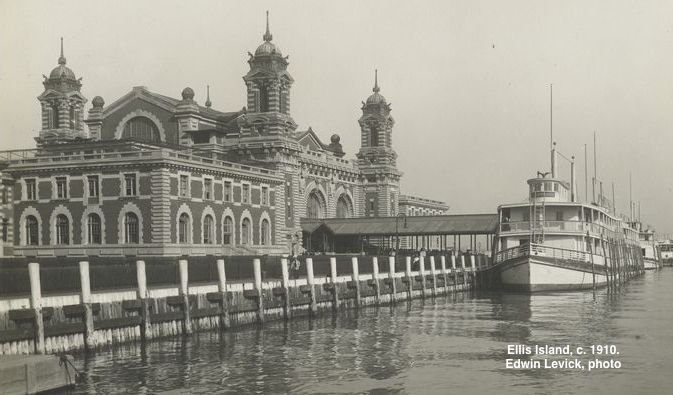
One of the notable characteristics of the Culberts is their abundant record of migration, and their worldwide distribution today.
Introduction
In understanding more about the Culbert people it is important to explore the facts surrounding their migration. What follows is some information about historical events that influenced migration from Scotland and Ireland, two of the countries where early Culbert records have been found.
Migration from Scotland
There were a multitude of reasons for emigration from Scotland. These included the results of war, religious persecution, and a strong desire to seek better opportunities elsewhere. With regards to the influence of war, as a result of the Battle of Dunbar, for example, about 1652 Oliver Cromwell sent a large number of Scots prisoners to New England in America. [1]
The Plantation of Ulster in Ireland was formed early in the 1600s, and an estimated 100,000 Scots emigrated to Ireland during that time. [2] Although no records of Culbert people have been found in the Plantation records (presumably because they would have been tenants and not landowners), it is suspected that this event constituted the first notable migration of Culberts to Ireland.
Also in the 1600s, Scots were required to take an oath of alleginace to their ruler. For various reasons, including religion, some refused. Many, known as Presbyterian Covenanters, who refused to take the oath, were put in town dungeons where they died of neglect. Beginning in the late 1600s, the Scots Covenanters faced increased persecution, and many went into hiding in the countryside. Some were accused (rightly or wrongly did not matter) of carrying arms or spying against the King’s soldiers. Many were executed on false accusations without any trial whatsoever. Others of some means were forced to host or supply a group of soldiers for a long period of time during the occupation of their towns. During these occupations, it was common for the soldiers to ransack and pillage the town. Others, accused of various crimes or having participated in an uprising, were sentenced to transportation to the plantations of America. By 1683, the army was fully empowered to fine and imprison persons found to be against the Episcopal Church, or accused of favoring the Covenanters, according to the law. [3]
One of the more fortunate men was George Scott, Laird of Pittochie, who was given a promise of liberty and a gift of about 100 prisoners, provided that he transport them to eastern New Jersey and land them before Sept 1686. [4] The ship Henry & Francis was chartered from New Castle, and 125 people, including Scott, departed for America. [4] Thirty-one died on the voyage, including Scott, and his son-in-law assumed his role. [4] Upon arrival in New Jersey, they were not welcomed on the coast, but further inland (thought to be Woodbridge) they were made very welcome. [4] The following Spring Governor Johnstone had them all cited before a legal tribunal of the province because they had not voluntarily gone to the ship nor bargained in any way for their passage. Thus, they were not in accordance with the laws of the province, and were scattered throughout eastern Pennsylvania, New York, and Connecticut [4] Thereafter, from time to time, other Covenanters were banished from Scotland to New Jersey, Delaware, and South Carolina until the latter part of the 1600s, when this religious persecution ended. [4] [5]
In the early 1700s, the English Parliament limited the export of woolen cloth from Ireland to England in order to encourage this market by English merchants. This development had the effect of impoverishing the Scotch Irish in Ulster, who lost their primary market. Starting about 1717, and continuing until the onset of the Revolutionary War in America, thousands of Scots Irish Ulster men and their families emigrated from Ireland to America. Religious restrictions in Ulster also played a role in their emigration. Although these emigrants traveled to various cities in America, a majority came to Pennsylvania because the policies of William Penn were recognized to be fairer than those of other colonies.
Migration from Ireland
There were a multitude of reasons for emigration from Ireland. These included religious persecution, famine, and a strong desire to seek better opportunities elsewhere.
Small numbers of Scots Presbyterians from Ulster had emigrated to America as early as the late 1600s, mainly from the Laggan area in northeastern Donegal. In 1718, their exodus began to increase significantly, when 11 ministers and nearly 300 members left Derry in five ships bound for Boston. The Aghadowey congregation under James McGregor settled Londonderry, New Hampshire. Another ship left Derry soon after, and settled in Casco Bay, Maine. At this time, Scots immigration into Ulster had almost ceased. 3,500 Presbyterians left Ulster for America between 1725-1727, and reached a peak in 1728-29.
The Scots who settled in the province of Ulster in Ireland were perhaps the first group to begin a wave of migration from Ireland to America. Having been encouraged to migrate to Ireland by grants and low rents, they experienced poor harvests, religious discrimination due to their refusal to convert to the Church of Ireland, and high rents. They left Ireland for America at a rate of about 4,000 per year. [6]
In the 1770s, emigration to America again increased to about 10,000 per year as rents rose, harvests failed, and the linen trade slumped. Emigration from Ireland almost ceased with the beginning of the American Revolution.
The unsuccessful rebellion of 1798 affected people throughout Ireland. Although dissatisfaction with England’s rule was expressed mainly in the south and west of the country, there was measurable support for the failed rebellion in the Ulster counties of Antrim and Down. These people were primarily Protestants, but there some were Catholics as well. [6]
In 1798, over a span of about three weeks, about 30,000 people throughout Ireland were killed in the rebellion. Many were armed only with pitchforks and pikes, and some were women and children. Following the end of this uprising, the commander of government forces in Ulster issued a general amnesty to the rebels in Antrim, however those of Down were shot. The two main Ulster rebel leaders were executed. These actions promoted a widespread fear of further reprisals and repression, and encouraged migration. [6]
The 1801 Act of Union between Great Britain and Ireland forced wealthy Protestants to give up their power, while Catholic emancipation was offered to the majority, although it never really was realized. The loss of Ireland’s parliament further weakened the home industries, while augmenting competition from English factories. Thus, the union of Ireland with England generated further discontent among the poorer Protestants, and heightened sensitivities to the continued oppression of Catholics. [6]
Emigrants from Ireland in the early 19th century generally had the means to travel and establish themselves abroad without the aid of family at their destination. In Ireland, after 1815, reductions in grain prices and increased livestock prices caused a shift in land use from farming to grazing. This change was felt most acutely by small to medium-sized farmers. There was less willingness to subdivide large farms among sons, and fewer opportunities for farm laborers. In Ulster, land holders were particularly small. The linen industry was also changing, with increasing consolidation in factories, which made female and child labor less needed. Protestants were more disposed to emigration because more had the financial means and because they had a recent tradition of mobility dating from the 17th and early 18th century migrations to Ulster from Scotland. [12]
Emigration was fostered because of the growing transatlantic trade. North America sought lumbermen and farmers, and on the return trip carried timber and other goods. Emigrating Irish were a welcome human ballast for the ships as they returned to American shores for more cargo desired by Ireland and England. Steerage cost about £ 5-6 between Ireland and New York City in the late 1820s, due to the competition. The Londonderry trade consisted of smaller companies using sailing ships of less than 300 tons that made no more than one or two trips per season, either Spring-Summer or Summer-Fall. Most were undertaken between Apr-Sept. During the winter ships typically handled cargo between the British Isles. [13]
By the late 1820s there was a strong influence of chain migration, where American settlers sent letters home strongly encouraging family and friends to emigrate, which they did in successive waves. [14]
Emigration was also influenced by the tradition of subdividing land at the death of the father into equal parts for each surviving son. Land size became so small, particularly in Ulster, that by the 1800s there developed a growing resistance to the continuation of this land partition tradition. The result was that second, third, and successive sons no longer received land. Emigration was thus seen as a way for the firstborn son to remain on the family plot he inherited, while allowing the younger surviving sons a practical option across the ocean in America.
Emigration to America reached a peak as a result of the devastating potato blight that first struck in 1845, and returned in 1846, 1847, and 1848. Although the majority, conditioned to scarcity and want, managed to survive the first outbreak, a terrible famine ensued as the blight returned to affect nearly the entire island. More than one million people died from starvation and disease. The British government did little to help. Many who survived were helped by individuals and private charities. More than one million people emigrated during those years. [6]
Those who chose to migrate to America, rather than Canada or Australia, were attracted to the major port cities of Boston, New York, Philadelphia, Charleston, and New Orleans. Each of these cities had its own advantages and disadvantages. Philadelphia, particularly, presented opportunities, because it was a thriving industrial city, with jobs available to both the skilled craftsman and the general laborer. Equally attractive was the availability of housing for purchase at reasonable prices or for cheap rents. The Irish stressed the importance of owning their own homes, and many achieved that after not too many years. Philadelphia also offered one additional attraction to the Irish immigrant – it was the cradle of American freedom from British colonialism. [6]
Migration Records
As an aide to finding immigration records, the following information may be helpful. [15]
In 1820, the recording of arriving immigrants to the U.S.A. was required.
In 1828, the British government began requiring that manifests (passenger lists) be maintained by ships’ masters.
In March 1847, the U.S. Congress passed an act requiring that “no vessel is to carry in the lower deck more than 1 passenger for every clear 14 feet nor more than two passengers for every ton of the ship’s burthen, and if the number of excess passengers exceeded twenty the the ship could be confiscated.” This led to an increase in emigration to Canada relative to the U.S.A., although many who arrived there later migrated to the U.S.A.
In 1865, the recording of immigrants was introduced to Canada.
Culbert Distribution
The earliest records found for Culbert people are in England, Scotland, and Ireland. Although migrations from those countries undoubtedly occurred as early as the 1500s, it was only in the 19th and 20th Centuries that migrations from Europe became common. Today Culbert people who spread from Europe have now become more predominant in the United States, Canada, Australia and New Zealand, along with notable population in South Africa resulting from British influences dating back to the early 1800s. [7]

Based upon a 2018 estimate of 2,522+ people with this surname.
Some comparative results in time to support these migration and distribution trends can be demonstrated. For example, in the 1881 Census of the United Kingdom (including England, Scotland, Wales, and Ireland), 91 Culbert individuals were indexed, compared to 256 individuals in the 1881 Canada Census, and compared to 620 individuals in the 1880 U.S. Federal Census. [8]
United Kingdom
Those comparative results cited above conflict with the following information. The Culbert surname distribution map below is based on the 163 entries listed in the 1881 U.K. Census where a place of birth is given. The table below the image gives the data. [9]

| Chapman Code (Map Label) | County | Country | Number of Births |
|---|---|---|---|
| FIF | Fife | Scotland | 23 |
| PER | Perthshire | Scotland | 15 |
| MLN | Midlothian | Scotland | 14 |
| ANS | Angus (Forfar) | Scotland | 13 |
| CHS | Cheshire | England | 13 |
| AYR | Ayrshire | Scotland | 11 |
| RFW | Renfrewshire | Scotland | 10 |
| LKS | Lanarkshire | Scotland | 9 |
| CLK | Clackmannanshire | Scotland | 7 |
| DUR | Durham | England | 7 |
| MDX | Middlesex | England | 7 |
| ABD | Aberdeenshire | Scotland | 6 |
| LAN | Lancashire | England | 6 |
| ELN | East Lothian | Scotland | 3 |
| GLA | Glamorgan | Scotland | 3 |
| STI | Stirlingshire | Scotland | 3 |
| KRS | Kinrosshire | Scotland | 2 |
| WLN | West Lothian (Linlithgo) | Scotland | 2 |
| CAI | Caithness | Scotland | 1 |
| DOR | Dorset | England | 1 |
| HAM | Hampshire | England | 1 |
| INV | Inverness | Scotland | 1 |
| KEN | Kent | England | 1 |
| LEI | Leicestershire | England | 1 |
| NFK | Norfolk | England | 1 |
| SSX | Sussex | England | 1 |
| YKS | Yorkshire | England | 1 |

1881 Culbert Distribution in the U.K. Based Upon Census Location

Heat Map of Pre-1900 Culbert Births in England, with 746 results, produced from the Culbert Family Genealogy Project, 7 Oct 2018.

Heat Map of Post-1899 Culbert Births in England, with 581 results, produced from the Culbert Family Genealogy Project, 7 Oct 2018.
In Sept 2002, an extract of an Office of National Statistics database containing a list of surnames in use in England, Wales and the Isle of Mann suggests that Culbert had 389 occurrences. [10]
United States
In 2000, the surname Culbert had 2,244 occurrences in the U.S. Federal Census. At that time, the racial/ethnic breakdown included nearly 77 percent White, almost 20 percent Black, a little more than 2 percent Hispanic, about 1 percent Non-Hispanic of two or more races, and minor amounts (less than 1 percent) of Asian and Pacific Islander or American Indian and Alaskan Native. [11]
To date, 3591 Culbert births have been found in the U.S.A. (See distribution heat map, below.) As significant data sets for other areas are compiled, maps of those areas will also be added here.

Total Culbert Births in the USA to Date, produced from the Culbert Family Genealogy Project, 7 Oct 2018.
References
- New World Immigrants, Vol. 1 has a small (16 page) account of this event and where these prisoners ended up. Further research on these immigrants can be pursued by consulting New England History General Register, I 378 and Suffolk Deeds, I 5-6. These sources provide immigrant names arranged in alphabetical order, but misspellings are common.
- David Dobson, 1999, Scots-Irish Links, 1575-1725, Clearfield Press, printed for the Clearfield Company by the Genealogical Publishing Company, Baltimore, Maryland, Parts I-II, ISBN: 0-8063-4686-8, Part I.
- Archibald M’Kay, 1864, The History of Kilmarnock, Second Edition.
- New World Immigrants, Vol. 1, pp. 421-423 has a short account of these events, with a passenger list, from the work of Miss S. Helen Fields, Covenanters and the Work of the Rev. John Cuthbertson, Washington, D.C.
- Commissioner’s Reports, Boston Records, Vol. 29, Doc. 100, at the Massachusetts Historical Association, Boston, has records of various sailings from Scotland to Boston between 1716 and 1766.
- Raymond D. Adams, 1992, An Alphabetical Index to Ulster Emigration to Philadelphia, 1803-1850, Genealogical Publishing Company for Clearfield Company, Baltimore, Maryland.
- Analysis of places in The Culbert Family Genealogy Project, James H. Culbert, Registration No. 4096, Guild of One-Name Studies
- “All Published Record Collections — FamilySearch.org”, retrieved 1 August 2015.
- RootsMap and GenMapUK
- “Surnames of England and Wales – the ONS list”, retrieved 3 Jul 2016.
- David L. Word, Charles D. Coleman, Robert Nunziata and Robert Kominski, Demographic Aspects of Surnames from Census 2000,” 2008, U.S. Census Bureau, compiled by Rhett A. Butler, retrieved 10 Jun 2016.
- Cecil J. Houston and William J. Smyth, 1990, Irish Emigration and Canadian Settlement: Patterns, Links and Letters, University of Toronto Press, pp. 43-44.
- Ibid., pp. 80-84.
- Ibid., p. 92.
- David Dobson, 1999, Ships From Ireland to Early America, 1623-1850, Clearfield Company, Inc., Baltimore, Maryland, ISBN: 08063-4943-3.
