
8 July 1942 – Dick enlisted in the U.S. Army at Philadelphia, Pennsylvania, after having completed one year of engineering study at the Drexel Institute of Technology, in Philadelphia.
16 January 1943 – He was ordered to report for duty and traveled by train from Philadelphia to San Antonio, Texas.
30 March 1943 – Began Navigation Flight School, Hondo Army Air Field, Hondo, Texas.

Dick Culbert, Aviation Cadet, 1943
19 May 1943 – Graduated from Navigation Flight School.
1 June 1943 – Began pilot training in San Antonio, which was continued at Jones Field, Bonham, Texas and Greenville, Texas. He did not pass this training due to flying deficiencies.

5 September 1943 – Began Aerial Gunnery School at Harlingen, Texas.
23 October 1943 – Completed Aerial Gunnery School.

25 October 1943 – Began Navigation School at Hondo, Texas.
23 February 1944 – Graduation from navigation training.


26 February 1944 – Began active service as Aviation Cadet, rated as Aircraft Observer (Aerial Navigator). Transferred to MacDill Air Force Base, Tampa, Florida. While in Florida he completed exercises in B-17 bombers.


Dick Culbert, MacDill AFB, Florida, May 1944
24 May 1944 – Completed training at MacDill AFB and the next day was scheduled for departure to the European Theater of Operations.

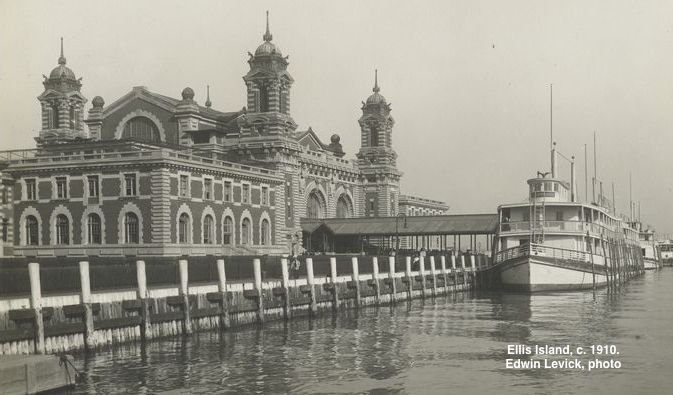
15 June 1944 [1] – Left Camp Kilmer at app. 1500 by train to Hoboken – boarded ferry to pier. Red X [Cross] had coffee + candy for us here. Embarked about 1800 – assigned to cabin with 12 officers. Ship USS William Mitchell. 0200 [16 June] left dock and at daybreak was out of sight of land.
21 June 1944 – First V-1 fire on London – heard news in ship’s paper.
29 June 1944 – Arrived in harbor at Mersey, Eng. – debarked the next day – Red X on hand again – entrained immediately for Stone (NW of Birmingham). Arrived there at midnight – reception pool – first time in an English pub. Also first mail from home here.
3 July 1944 – Arrived at Bovington, near London, for ten day course. Met Cosgrove here. Spent July 4 in Watford on pass with crew – went bicycling.
15 July 1944 – On train to Polebrook – had several hours off in Birmingham the way. Barreau + Clint Hammond’s crew with us – Finney went to Deenethorp 10 miles away. [Dick was assigned to Station #110, Polebrook, near Peterborough, Northamptonshire, England as a B-17 navigator with the 94th Combat Wing, 510th Bomb Squadron, 351st Bomb Group, 8th Air Force.]

8th Air Force

351st Bomb Group

510th Bomb Squadron


Crew of the Baby Butch. Photo taken about September, 1944. Rear, left to right: Lt. E.C. (Gene) Saur, bombardier; Lt. Walter (Dick) M. Culbert, navigator; Lt. Ed J. Hennegan, pilot; Lt. George F. Adams, co-pilot; S/Sgt. Charles Waters, engineer. Front, left to right: S/Sgt. Claire Carl, tail gunner; Sgt. Charles Johnson, waist gunner; S/Sgt. John Strick, radio operator; Sgt. Karl Buschenfelt, ball turret gunner; Sgt. Emmett Bennett, waist gunner.

Simplified Flight Calculator. This was a key tool used by Navigators.

Note in the above Individual Flight Record that Dick’s first operational mission over Europe occurred on 28 Jul 1944. The ones listed previously were training runs over England.
25 July 1944 – Bud Walton [friend from Collingswood, NJ] shot down in Austria – heard about it one week later from home.
28 July 1944 – First operational mission – I flew with another crew – Ed as copilot on another – target synthetic oil plant Merseburg [Germany] – near Leipzig – undercast PFF.
29 July 1944 – Our crew all together on this mission, except George – Merseburg again – good results – high box hit by fighters at tgt. [target]. George came back on 2 eng [engines] on the deck.
30 July 1944 – [Official #3, but on 1 Aug] Chateaudun near Orleans, Fra. [France] Light airfield – no flak – a milk run.

1 August 1944 – Gene and Ed in hospital with dysentery – George in Scotland – I flew with another crew – tgt. Stuttgart [Germany] – Fall weather – hit airfield. [In other records this was not credited to Dick an an official operational mission.]
2 August 1944 – Went to London for 2 days with the crew – stayed at Strand Palace near Piccadilly Circus. Westminister Abbey – Tower of London – Parliament.
5 August 1944 – Ops. – tgt. Caen front lines – screwed up affair. [Not credited as an official mission.]
7 August 1944 – Ops. – pillbox forts at Brest – flak light – good results. [Not credited as an official mission.]
8 August 1944 – Ops. – tgt. Munich – 10/10 over tgt. – bombed tgt. of opportunity – Luxembourg MPI center of city.
9 Aug 1944, Luxemburg. [Not mentioned by Dick in his Journal, but listed on a personal card as one of his missions to M. P. I. City, with a target of opportunity over Munich.]
11 August 1944 – Ops. – tgt. Louviers, Fra. – near Rouen – bridge over Seine. Flak holes in nose cone too close for comfort.
13 August 1944, Tactical, France. [Not mentioned by Dick.]
14 August 1944, Hagenau, Germany. [Not mentioned by Dick.]
16 August 1944 – Ops. – Leipzig [Germany] – Airfield on edge of city – flak very heavy – lost a prop. [propeller] on the [brief?] run and lost formation – fire in eng. [engine]. Lost another eng. later – Emer. [emergency] land. [landing] at Rock Heath, Norwich [England].
18 August 1944 – Ops. – called out of classroom – no briefing or maps – tgt. Namur, Belg. [Belgium] Flew as bomb. [bombardier] nav. [navigator]. Nose gunner hit – did 360 [degrees] ov. [over] tgt. Our crew didn’t fly. [Mentioned by Dick as occurring on 17 Aug.]
[From Dick’s service records…19 August 1944 – awarded Air Medal with 2 oak leaf clusters “for meritorious achievement while participating in sustained combat operations over Germany and German occupied countries…” See also news article and a letter dated 31 Oct 1945 (date conflicting), shown below..]


21 August 1944 – Ops. – Peenemunde – near Barth – V-1 exp. [experimental] station – saw Sweden – did 360 [degrees] over tgt. heavy flak. [Not credited as an official mission.]
23 August 1944 – Ops. – Ludwigshafen [Germany] – oil plant – PFF – hit Mannheim instead. Next day went to Leeds with the crew for two days. [Not credited as an official mission.]
24 August 1944 – Ops. – Weimar (Leipzig) [Germany] – ordinance factory in woods – P. Finney + crew shot down today. [Mentioned by Dick as occurring on 20 Aug.]
25 Aug 1944 – Noball, France. [Credited as an official mission but not mentioned by Dick.]
26 August 1944 – Ops. – Celebrated birthday [22nd] over Germany – Ludwigshafen again – good weather today. Squadron party in club at night – had a good time. [Not credited as an official mission.]

8 September 1944 – Ludwigshafen, Germany.
9 September 1944 – Ludwigshafen, Germany. [Not mentioned by Dick.]
10 September 1944 – Ops. – Merseberg – oil – flack heavy – very bad weather. Detoured around it almost to Switzerland – gas very low.
11 September 1944 – Lutzendorf, Germany. [Not mentioned by Dick.]
September 12, 1944 – On this fateful day, during the 351st Bomb Group’s 204th Mission [Dick’s listed 15th or official 16th mission], “the briefed primary target was Rhuland, but clouds in this area prevented bombing. The lead and low boxes bombed an unidentified target near Rhuland, and the high box the outskirts of the city of Plauen. Flak was light and inaccurate. The Luftwaffe came up in force northeast of Berlin. About 35 to 50 fighters were seen, mostly Me 109s and FW 190s, and a few rocket firing Do 217s. They attacked in pairs or small groups from the tail. A few also dropped aerial bombs, without noticeable results. [3]
Six planes were shot down in the target area. They were: Lt. [Charles C.] Schoenian in 43-37986, Lt. [Edward J.] Hennegan in 43-38123, Lt. [Claude T.] Adams in 43-38089, Lt. [James R.] Brown in 43-37850, Lt. [Robert C.] Lopert in 42-97318, and Lt. [William F.] Schmollinger in 44-8100. Lt. [Donald E.] Hadley in 44-6139 managed to make it back as far as Belgium where he crash landed. The Group was led by Major [Paul L.] Fishburne [of the 511th], Captain [Eli S.] Fowler [of the 509th], Captain [Carleton] Cleveland [of the 509th], and Lt. [John W.] Heck [of the 509th]. [3]
In the Loss Listing section of “A Chronicle of the 351st Bomb Group (H), 1942-1945” is the following mention of Dick’s crew: “510th [Bomb Squadron], 1st Lt. Edward J. Hennegan (POW), 2nd Lt. George H. Avaritt (POW), 2nd Lt. Walter M. Culbert (POW), 2nd Lt. Eugene C. Saur (POW), Sgt. Karl W. Buschenfeldt (died of wounds in POW camp), S/Sgt. James C. Waters (POW), S/Sgt. John H. Strick (POW), Sgt. Emmett F. Bennett (POW), and S/Sgt. Clair I. Carl (KIA). [4]
As Dick described it, his mission that day was to bomb an oil plant at Rhuland, west of Leipzig, and his plane fell behind the formation west of Berlin and was hit by FW 190s. All engines caught fire, 2 were feathered, and the interphone was out. At 2,000 feet [sic – 20,000 feet, as corrected later by Ed Hennegan, pilot] the crew bailed out. Gene Saur, Ed Hennegan and Dick were known to have parachuted safely in the woods, and the others were out of sight. Dick met an unnamed Sergeant and spent 6 days walking and starving with him until they surrendered to the Germans at an airfield north of Berlin and were taken to Luftwaffe Headquarters in Berlin. At the railroad station on September 19th Dick met Karl W. Buschenfelt, wounded, on a stretcher before Dick was sent to Frankfurt AM Mainz. September 20-21 Dick was in solitary and interrogated. He was then sent by train to Wetzelar Dulag Luft where he saw Hennegan and Emmett F. Bennett. On September 24 Dick was sent to Stalag Luft I, arriving on September 27th with Hennegan, and spent the remainder of the war in this POW camp, located near Barth, Pomerania, Germany. They were liberated by the Russians in early May, 1945.


Dick put together a journal of his experiences while in the POW camp, which is a main feature of this memorial to him. See the following linked section, A Prisoner of War (POW).

Information from and about Stalag Luft I
Calendar of Events After Return to U.S. Control

[From other sources we learned that Dick was transported to France, and on June 9, 1945 he left Camp Lucky Strike, France by truck, boarded the naval transport ship USS Hermitage at LeHavre, France that evening, and arrived in New York Harbor on June 17th, docking at the U.S. Line pier. After arrival in the U.S., he went on 60 days leave.]

June 1945 News, On U.S. Leave

28 August 1945 – Recommissioned US Army, Second Lieutenant in reserve Corps with Second Service Command, NY, NJ, Del, with HQ at Governor’s Island, New York City.
25 September 1945 – Assigned and working at Atlantic City, New Jersey
26 September 1945 – Processing appointment at Fort Dix, New Jersey
28 September 1945 – Assigned and working at Fort Dix
6 October 1945 – Discharged from active service at Fort Dix
Letters Home While in the Military, 1943-1945
The letters Dick wrote home were saved.
Those written during his U.S. military training and after his release from captivity can be seen here: Letters Home 1943-May 1945
Those written while in service in England can be seen here: Letters Home Jun 1944-Sep 1944
Those written while a Prisoner of War can be found here: Letters Home While a POW Sep 1944-May 1945
Experiences With Pilot Ed Hennegan
In October 2001, after Dick’s death, contact was made with Ed Hennegan, the pilot of Dick’s B-17 crew and who bunked with him in Stalag Luft One. Ed’s letters about their experiences and his recollections of Dick follow here: Hennegan Letter


Footnotes
- Dick kept a calendar of events while he was Prisoner of War (POW). These entries are too small and indistinct to scan and provide as part of the POW Journal, so they have been transcribed and added separately in chronological order in this Military Service section. The entries start on 15 Jun 1944, before he became a POW. Those related to his POW experiences are placed in a similar Calendar of Events section under A Prisoner of War. All items in [brackets] are in addition to the POW Journal entries, which have been added to enhance understanding.
- Official missions are described in Dick’s military records as shown above. They do not agree with Dick’s personal records from his POW journal. These differences cannot be reconciled, so both are shown.
- Ken Harbour and Peter Harris, A Chronicle of the 351st Bomb Group (H), 1942-1945, Fourth Edition, Revised 2001, Southern Heritage Press, St. Petersburg, Florida, p. 54.
- Ken Harbour and Peter Harris, A Chronicle of the 351st Bomb Group (H), 1942-1945, Fourth Edition, Revised 2001, Southern Heritage Press, St. Petersburg, Florida, p. 109.
